
PeterRS
-
Posts
7,036 -
Joined
-
Last visited
-
Days Won
403
Content Type
Profiles
Forums
Events
Everything posted by PeterRS
-
No, Thailand's air con service companies really want a longer term contract for a number of visits per year. That way their basic income is guaranteed. Often it is difficult to find any company to do a one-off service - as I have discovered.
-
Israel And The Palestinians: A Nightmare In Desperate Search Of A Solution
PeterRS replied to PeterRS's topic in The Beer Bar
Great advice indeed, the more so given the terrible and monstrously expensive adventures of the USA after 9/11. A 20-year war in Afghanistan which it lost. A long war against Iraq which not only had nothing to do with 9/11 but which did succeed in encouraging the formation of ISIS, a war that so destablised the region its results are still to be seen today. Re Israel and the situation in which it finds itseIf, without the ultra-right wing Orthodox Israelis and the militant settlers which pull the strings of Netanyahu's governments (although I suspect Netanyahu is himself ultra-right wing) and also pulled those of Ariel Sharon's government, it is unlikely Israel would be facing the mess that it is in. Let's not forget that Netanyahu has preached over and over again the need for security. As the New York Times reported 6 days ago, "Mr. Netanyahu has presented himself as an unflinching supporter of Israeli Security." Yet he has avoided earlier excursions into Gaza despite being fully aware that Iran was propping up Hamas. If his own security people did not tell him, the Americans certainly did. Well, whose government let the country down in such a dreadful way two weeks ago? The odd thing about Netanyahu is that for all his bellicose talk over the years, he has essentially been risk averse. Some suggest this is a result of his older brother Yonatan having been the only Israeli soldier killed during the daring raid on Entebbe airport in 1976. He does not want to be remembered as the Prime Minister who presided over the funerals of masses of young Israelis. Until October 7, the number of israelis killed under Netanyahu's watch has actually been less than under any other Israeli Prime Minister! Despite all his anti-Palestinian rhetoric when in power, he has not made any serious attempt to make peace. Instead, he has spent much time trying to broker diplomatic relations with former foes like Saudi Arabia and other Arab nations, hoping that they would do the job for him. Now with war looming, he has even stepped back and put the decsion in the hands of a war cabinet involving the national government he has established. Essentially it would seem he is at heart something of a loud mouthed coward. https://www.nytimes.com/2023/10/17/world/middleeast/israel-netanyahu-gaza.html -
Israel And The Palestinians: A Nightmare In Desperate Search Of A Solution
PeterRS replied to PeterRS's topic in The Beer Bar
You make it sound as though there are only two choices. Maybe you are correct, but the one which ends in tragedy for all is the wrong one. It is a war crime involving the massacre of a huge nunber of civilians, plain and simple! -
A general respect for the elderly, especially family members, is relatively common throughout the Asian continent. How much of that is due to the Chinese diaspora with the estimated 20 million Chinese emigrating to South East Asia in the 1800s and early 1900s I do not know, but I suspect it must have something to do with it. After all, devotion to family is one of the central Confucian values. Confucian influence would also explain to a certain extent why the more isolated countries of Japan and Korea take the concept of devotion to family elders as importantly. Cetainly by 1910 studies show that there were almost 800,000 Chinese emigrants in Thailand many of whom had married Thais. Even today the country boasts the largest Chinese community outside China. But as the article points out, it extends further in Thailand. I wonder why? Could it have something to do with Thailand never having been colonised and therefore having no real external threat to national identity? I still meet guys who insist it is their duty eventually to return home to look after their ageing parents. But with economic advancement and the desire for more independent lifestyles already prevalent in most Asian societies, surely this is likely to change in Thailand as elsewhere.
-
Thailand’s neighbors compete for massive airport expansion
PeterRS replied to a topic in The Beer Bar
Do you recall that part of an expressway ran through the taxiway? So when aircraft were moving to or from the runway, the road had to be closed for a few minutes! -
There have been posts over the years about misunderstandings with boys from the bars and other difficulties some have found in communicating with Thais. I have been coming to the country for four decades for work, play and finally living in Bangkok, but still find Thai logic all but impossible to comprehend. The latest incident concerns of all things air conditioning maintenance! For many years I had an annual contract with one company to come to the apartment three times a year to service three units. When they went out of business, I asked our excellent receptionist who speaks pretty good English if she could help find another company. I get on well with her, always give her a Songkran brown envelope and other little gifts from time to time. But after almost a year she could come up with none. A friend who lives in a much more luxurious condo then suggested I try their maintenance company. Although a lot more expensive, they came twice, seemed excellent, but then did not reply to calls. The receptionist tried half a dozen times before finally someone answered. The company had decided to base themselves out of Bangkok, allegedly! In some desperation, last week I did what I should have done almost 2 years ago! I spoke to my neighbours to find out who serviced their units. It is the company run by the husband of our receptionist, they told me! So during all this time when allegedly she and also I have been trying to find an aircon contractor, her husband ran such a company yet she did not tell me! After I approached her about this to see if they could come, I assumed it would be a few weeks later. They turned up the next day, spent much longer than the other companies and as far as i know did an excellent job. So why could she not have told me this before? I'll never understand!
-
He won't come becuase he knows that he will be arrested. That was one reason given for his not attending the BRICS Summit in South Africa recently. Fear of assassination despite an army of security will no doubt also be a concern.
-
Israel And The Palestinians: A Nightmare In Desperate Search Of A Solution
PeterRS replied to PeterRS's topic in The Beer Bar
Inevitable? What is bound to be a massacre that includes tens of thousands - maybe even hundreds of thousands - of non-combatant civilians, including women and children is "understandable"? It's a war crime. I realise that feelings can be and are in many cases quite strong on this subject. Mine certainly are as readers will be aware. I want to put it in more personal terms. In March last year back in the UK, I met some recent friends of my sister, a Palestinian doctor working in the UK and his Taiwanese wife. They had an adorable little baby. He is safe as he has residency in the UK where the National Health service desperately needs his skills. All the others in his family live in Gaza City - his parents, his two brothers and their families and his sister and her family. With Israel's warning about an imminent invasion, they all moved to the south of the Gaza Strip. There they found a vast number of people, no food, no water, no proper sanitation, no tents. They described it as hell. So they chose the hell they knew and returned to their homes. At least there they have their own generator and there is a well for water nearby. They desperately want to live, but they realise there is a good chance some or all will die. They have already said their goodbyes. These good people have nothing to do with Hamas and condemn what happened in israel in the most vehement terms. But Israel is likely to bomb them out of existence. We all feel desperately for the families and loved ones of those innocents who were murdered in Israel. WIll the world feel so desperately for those already being killed in Gaza and those innocents about to die? -
Sorry I don't wish to take your word. My partner has not the slighest desire to go with anyone from a gay bar and the mention of money makes him feel unclean. He has a wonderful knack of making friends and keeping friends. I am sure he will settle down with another after I die or we split up for some reason. And his future is definitely in Europe, not Thailand.
-
Israel And The Palestinians: A Nightmare In Desperate Search Of A Solution
PeterRS replied to PeterRS's topic in The Beer Bar
Once again it is you who are deflecting and using analogies that bear no resmblance to the actual disucssion. Who brought up Ukraine? Certainly not me! Who brought up the price of eggs? Certainly not me! If you simply responded to legitimate questions based on your own speific statements, there would be no need for such inaccuracies. And your analogy suggesting that the US supporting Israel was like the US helping the UK with Lend Lease in WWII was totally wrong. Yet you continue to throw out attempts to discredit comments from other posters with little bearing on accuracy! Of course there are pros and cons in every discussion. I make my points and give reasons. I rarely find reasons when you make inaccurate statements - with respect! -
Israel And The Palestinians: A Nightmare In Desperate Search Of A Solution
PeterRS replied to PeterRS's topic in The Beer Bar
And you seem to forget what Israel has visited on the Palestinians. In just the last year alone, the number of Palestinians killed in the occupied West Bank by Israeli forces is the highest in nearly two decades. As Human Rights Watch has declared, thanks to Israeli actions Gaza is an "open-air prison." There are no rights and wrongs. Both sides are equally guilty. -
Corruption! London Heathrow to Paddington in town is $30. From the low cost carrier airport Stanstead it is $28. The Arlanda Express in Stockholm in $29. But these seem to be by far the highest. Even Tokyo's Narita Express is just $20 for an 80 km ride and it has remained that price for years.
-
Israel And The Palestinians: A Nightmare In Desperate Search Of A Solution
PeterRS replied to PeterRS's topic in The Beer Bar
I attach "blame" only because I believe, as it seems you (and no doubt others) do not agree that the history behind present events has to be understood, the more so if solutions to problems in the world have to be found. Nothing - absolutely nothing - will change my view. As for a solution, I have already proposed one, even though the chance of either side accepting it is zero. You do have a tendency to compare like with unlike, with respect! The support for the UK (not merely England) early in WWII has been proven in dozens of sources to be in an effort to keep the Nazis and their ghastly ideology in Europe and away from the USA. If Hitler had succeeded, Roosevelt knew perfectly well that the USA would be the next target. Helping the UK in Europe was far easier and vastly less expensive than having US troops cross the Atlantic to fight in Europe, the more so considering much of the cost was in loans. After Hitler quickly declared war on the US, the costs of US military actions in Europe rose humungously by comparison. US support for israel has nothing to do with stopping Arab nations from invading the USA or making it more secure. Apart from obvious sympathy with the plight of the Jews following the Holoicaust, the USA has a very sizeable and influential Jewish community of approximately 6 million. Politicians have zero desire to upset them, whereas the Palestinian community is tiny in comparison with approx. 255,000. Few votes there! In March this year, the Congressional Research Service reported that between 1946 and 2023, the US has provided an estimated total of US$260 billion in various forms to Israel (in 2021 inflation adjusted dollars). Besides, the US purports to support democracy around the world. In the US eyes, Israel is a democracy whereas neighbouring countries are not - at least if they have elections they are rigged. A Paper by the same Congressional Service shows that aid routed via UNRWA, the United Nations Relief and Works Agency devoted to Palestinian refugee assistance, came to US$6 billion by 2017. $260 billion against $6 billion. That fact speaks for itself. You might consider arguing that 9/11 was an attack at least on behalf of Arab nations on the USA, another ghastly terror event. Yet the root cause of that attack was once again US State Department actions. By arming and financing the mujahideen during the near-decade-long Soviet occupation of Afghanistan, the USA allowed Osama bin Laden to found, finance and equip Al Qaeda with both weapons (many American weapons) and a fierce anti-US dogma because it was perceived to be extremely anti-Islam. This led to planning for a violent struggle against the USA. The rest we know. 9/11 had absolutely nothing to do with the general Arab world. Incidentally, look up Osama bin Laden on wikipedia. You will see an entry marked Department of Justice - Federal Bureau of Investigation. Open it and what do you find? "Access Denied"! -
How dreadful! I wonder how long they had been together - quite a long time I expect. Losing a boy friend at that age must leave one with a horrible feeling of emptiness and no doubt fear for the future. I know from many of your earlier posts that you are one of the most caring of people. I doubt you could have done more. While I agree with @reader that gay expats in Thailand tend not to be - as a general rule - very caring about fellow gay expats, I also agree with @Marc K and suspect quite a few do not consider their fellow gay men as a community any more. Time has moved on. Perhaps I was lucky in that when i did move here, I already knew a couple of expats and several Thais. Now with a long-time Thai partner, I have a small group of gay friends, western and Thai. and he has a larger group of Thai friends. Fortunately he likes my friends and I really enjoy being with his friends. None of them know much about the gay scene except one who is still desperate to find a German boyfriend! We do not go out to gay bars as we prefer an ambience that is not completely gay. In fact, my partner had never been to a gay bar until the friend desperate to meet a German took him to Soi 4 where they had a few drinks at Balcony. My partner said he would never go back. The reason? A few farang (probably tourists) came up to the two of them to ask them to go back for the night with them at the same time asking what fee to pay. When both politely would say 'no', the farang all basically told them to fuck off! I have met some other posters here and have arranged to meet another when he is next here. But we are all different and mixing with my existing friends gives me much enjoyment. For others I know it is different, and especially for those whose lives seem to revolve around a Thai or Asian boyfriend.
-
I think if you were to look back at posts made on gaythailand over the last 15 years, you will find quite a few making the same suggestions. Allied to more originality was a continuing plea that the bars offer more fun for customers rather than the same old, same old.
-
Thailand’s neighbors compete for massive airport expansion
PeterRS replied to a topic in The Beer Bar
These points raised by Barry Kenyon are certainly factors to be considered. On the other hand Singapore in 1970 had its civilian airport based at Paya Lebar. With passenger numbers increasing considerably, especially from the kangaroo route between the UK and Australia, in 1972 a British consultant's Report recommended the rapid expansion of Paya Lebar. But then passenger numbers declined with the soaring international price of oil. It was Lee Kwan Yew who reconised two things. First, with increasing birthrates, the island state would eventually need more land for housing. Second, he considered the huge hike in oil prices a temporary blip. Lee determined that a new airport built on reclaimed land away from urban areas would make SIngapore ready to accommodate what he believed would be an eventual surge in air traffic. Paya Lebar was converted for military use and a start was made on Changi Airport. In its first year of operations with 1 terminal, it handled 12 million passengers. It now has 4 terminals, the more recent ones considered a marvel of airport terminal design being copied by others - notably recently at Doha. Handling capacity is now 85 million passengers. I suspect like Changi future estimates for the new Asian airports are not overblown, certainly in the longer term. -
Israel And The Palestinians: A Nightmare In Desperate Search Of A Solution
PeterRS replied to PeterRS's topic in The Beer Bar
Again I fail to understand your logic - but then logic can be different from one person to the next. I suppose anyone who knows Thais will be in the same boat for Thai logic almost defies understanding. That said of course it is essential to trace back half a century and more, for this present disaster (for both sides) - as in all conflicts - did not happen overnight. Had the Ottoman Turks and then the British had more spine and been prepared to hammer out an effective solution all those years ago, what we have seen in recent weeks and what is about to come would almost certainly not have happened. Had the US and the UK not interfered with Iran's elections and then backed the Shah to the hilt, Iran would not have turned so violently against the west. Of course momentum was building particularly in Iran. It was not only in place, it was becoming increasingly ugly and violent. Only the western powers decided to turn a blind eye. Historical context is in most cases vital in understanding the present. @vinapu seems to believe in the biblical eye for an eye doctrine. Do you equate how Israel has treated the Palestinians over many decades with the reactions taken by Israel as "an eye for an eye"? If the latter is an eye, the former is shooting half a head off. I condemn in the strongest possible terms what Hamas has done especially in the outright murder of civilians. I condemn what Hamas stands for. But how Israel is responding is a far worse massacre mostly of civilians, many women and children. Was the US invasion of Iraq in 2003 retaliation on an "eye for an eye" basis"? Of course not. Eye for an eye presupposes proportionality of response. I agree completely. Two states is presently not on the table, sadly. And even if magically it were to happen, given the history of the last few decades, neither state is going to have any trust in the other. Unless, of course, there is some sort of buffer between them and a truly international force guarding it. And that isn't going to happen either in my view. As for the USA, sadly I again agree with @vinapu. When its stated goal almost since the founding of israel has been to back it up with billions and billions of dollars in cash and the latest military equipment, no Arab country let alone the Palestinians will accept the USA as an impartial referee. If all the Arab states were to set aside their many differences and come up with a common solution, just perhaps there could be some kind of peace. But then how can there be trust when israel possesses nuclear weapons and, as far as we know, other Middle Eastern countries do not? Peace can only come about along with trust - a commodity totally lacking on both sides. -
A new play Cowbois is already previewing at the Royal Shakespeare Company's Swan Theatre in Engand's Stratford. It's set in a sleepy Wild West town where a handsome bandit known as Jack Cannon, a trans masc cowboy, swaggers up to the saloon and inspires a gender revolution. The play is presently undergoing previews and officially opens on the 24th. It is scheduled to run until November 14. If successful it will no doubt be transferred to London. The Observer newspaper got an early look at rehearsals. Today's paper offers a series of photos, of which these are just three. Vinnie Heaven as Jack Cannon does look cute! Vinnie Heaven being fitted with his costume All photos by Sarah Lee/The Observer https://www.theguardian.com/stage/gallery/2023/oct/20/backstage-cowbois-rsc-western-in-pictures



-
Israel And The Palestinians: A Nightmare In Desperate Search Of A Solution
PeterRS replied to PeterRS's topic in The Beer Bar
So your specific answer to your spectific statement is you have no answer. Fine. Your prerogative. -
Unfortunately only the first is mine. A long time ago one company I worked for put me up in the Sydney Park Hyatt across from the Opera House which was framed in the window. An amazing sight to wake up to.
-
Israel And The Palestinians: A Nightmare In Desperate Search Of A Solution
PeterRS replied to PeterRS's topic in The Beer Bar
That is not the question I have asked in response to your earlier statement. You were very clear in stating "no autocratic regime has more to lose than Iran if it miscalculates the consequence of future actions." All I have asked is very simple given the simplicity of your statement. What will Iran lose? Lose from which nation? Or of it is easier, what in your own view will Iran lose? The USA declared Iran a state sponsor of terrorism way back in 1984 - nearly 40 years ago. In the Department of State 2021 Country Reports on Terrorism there is a very long list of Iran's terrorist actions. Even in the section dealing with Programs and initiatives, there is absolutely nothing about what specifically the USA has done to mitigate or even stop Iran during that time! Arguably that's because it has done very little. I have been clear in stating there is likely to be virtually no come back on Iran that it is not presently suffering - providing of course it does not directly strike America or American targets. I wish there was, but I can see nothing barring a nuclear strike. And the Lord only knows how that would escalate worldwide! Sanctions? They have been very tight for years. Military action? From which nation? I accept that ten years ago wiping out part of Iran might not have been too difficult. Now the whole scenario is very, very different. For years Iran has operated virtually with impunity as a bad actor in several Middle Eastern countries. The US has done virtually nothing. The EU has done virtually nothing. Israel has done virtually nothing. Russia and China are now its allies. No western government is going to take on Iran, least of all the USA with all its other military commitments and possible future commitments around the world. Iranian missiles and drones can be shot down day after day, but that does virtually zero harm to Iran. I would still appreciate an answer to your very specific question made in response to my earlier post. -
Amsterdam has long been known as a sex capital with its officially sanctioned red light district virtually bang in the city centre. The narow streets and neon booths of the centuries old red-light district with the hookers doing their best to attract customers from their windows has been an attraction for many. Moving the red-light ditrict away from the centre has long been a desire of many in the city, especially the present Mayor, Femka Halesma. Moving the district out of the centre is part of her continuing effort to change Amsterdam's image as a party capital. It has already launched a "stay away" policy largely targeted at British men in the 18 - 35 age group who come for stag nights and boozy week-ends. This has raised anger in Britain. Not everyone is happy about the proposed move, especially residents of the three areas short-listed for the new red-light district. On the other hand, the centre of Amsterdam would still have a great many attractions for tourists. Would that be as true if the authorities took the sex trade away from Bangkok's city centre? https://www.theguardian.com/world/2023/oct/19/amsterdam-sex-workers-protest-against-plan-to-move-red-light-district
-
Odd that Singapore which has been officially anti-LGBT wth its section 377A on the statute books, has taken the opposite route. That wily statesman Lee Kwan Yew realised near the end of his term as PM that Singapore needed muti-national companies to locate their Asian head offices in the island state. There was intense competition with Hong Kong which had till then won the race hands down. Lee accepted that the executives whom they brought and attracted would seek a lifestyle somewhat similar to what they enjoyed in the west. So the government not only offered tax advantages, they first opened the door to major entertainment companies, particularly those headed by Andrew Lloyd Webber and producer Cameron Mackintosh. Then came the Universal Studios Theme Park and a host of other attractions on Sentosa. The restaurant scene soon expanded with some of the finest eateries in Asia. By the early 2000s the tiny gay nightlife scene soon enlarged with more bars, more saunas, more spas and a gradual relaxation of harrassment against the LGBT community. Now that Section 377A is finally a thing of the past, there are no legal restictions on gay men other than the usual issues of age, rape, and so on. Many in SIngapore society are still wary of the new LGBT freedoms, but as in Hong Kong it is likely these concerns will eventually wither away.
-
Israel And The Palestinians: A Nightmare In Desperate Search Of A Solution
PeterRS replied to PeterRS's topic in The Beer Bar
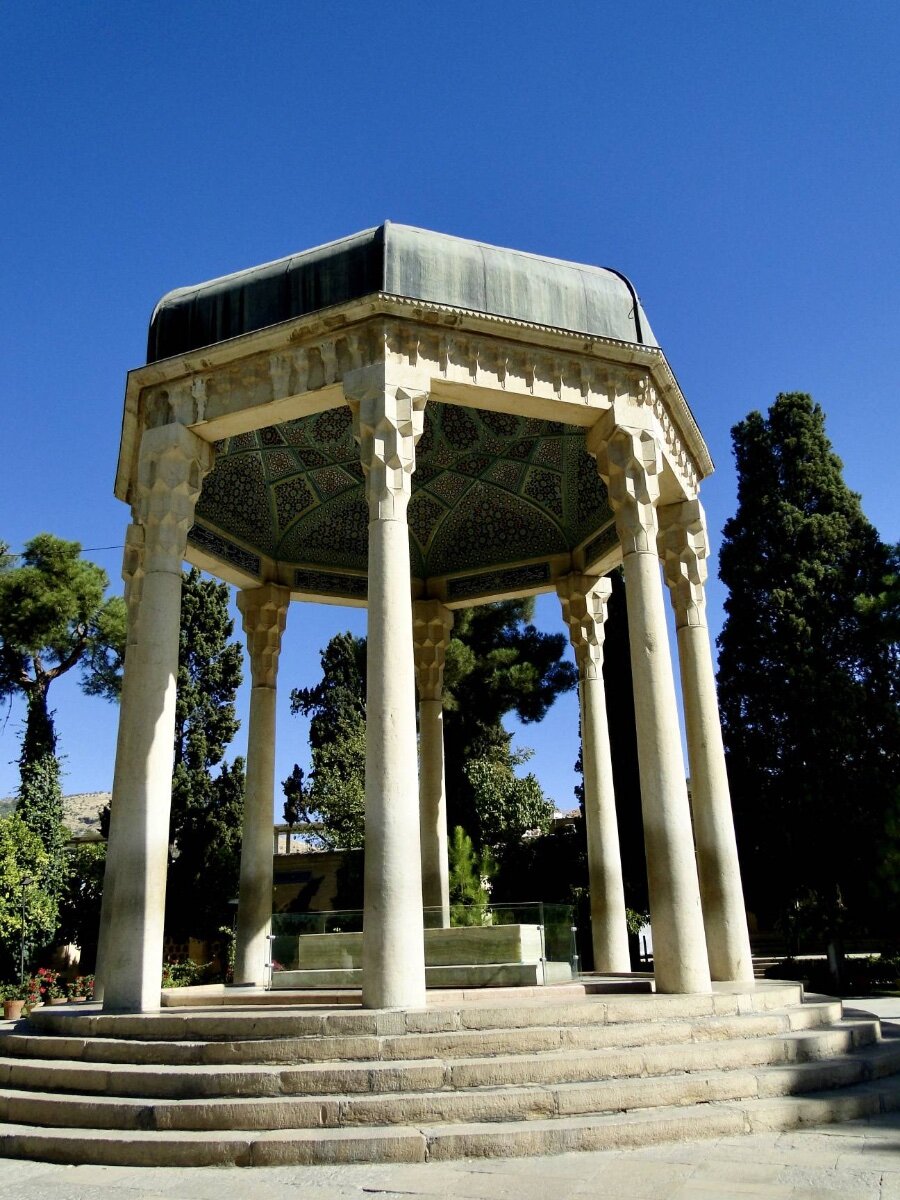
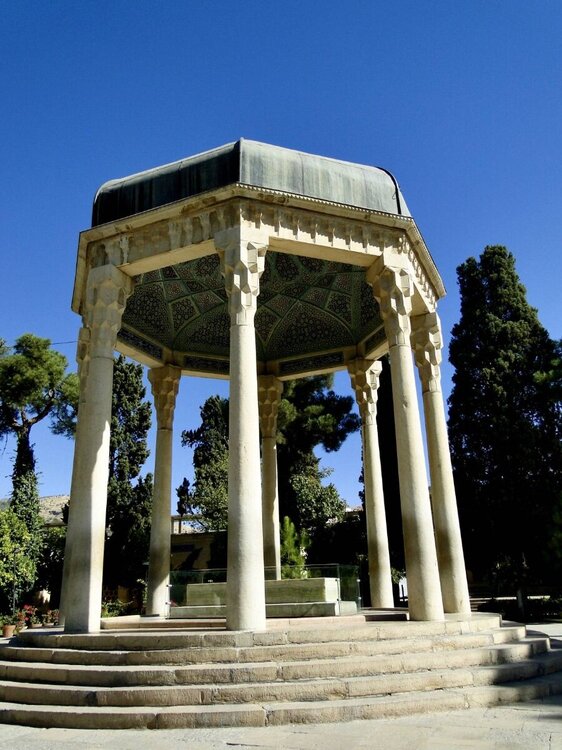
I am aware from earlier threads that you have also visited Iran and been charmed by its beauty and its peoples. I am also aware that the Sunni/Shia'a schism continues to dog the world in an even worse manner that the Great Schism between the Christian and Orthodox Churches centuries ago. Indeed, on the week-end I arrived in Tehran it happened to be the most important Festival of Ashura when Shia's commemorate the death of the grandson of the Prophet Muhammad. I watched from my hotel processions of men of all ages, the younger ones engaged in self-flagellation by beating their backs with what looked like ugly chains. Yet, on the day after when all cafes and restaurants - indeed all shops - were closed, I encountered a kindness I found both bewildering and tremendously uplifting. Walking through the bazaar, virtually every stall holder offered me coffee or tea. Walking along a street mercifully empty of traffic, restaurants had tables outside with meals which they handed out to almost anyone who passed. This included me, even though I was from a country which had imposed crippling sanctions on their country. Iran has by far the largest Shia's population of any country in the world. Had I been a Sunni Muslim, I am certain the hospitality would still have been extended to me. Refreshments were always handed over with a smile. I mention this because I do fervently believe that only a tiny minority of Iranians are fanatics. Take away the 300,000 or so who are in the hated Revolutionary Guard under the thumb of the clerics, and you will not find many fanatics. Like you, I spoke to quite a number of Iranians, including ordinary men on the street whom we stopped to find a particular mosque. I talked with one group of young men and women at the same Tomb of Hafez. Many were keen to practise their English. In Shiraz, my guide's father made wine - a strict no-no in Iran with severe punishment. In a vegetable juice bottle, he gave me some of the wine. It was passable and a nice prelude to a dinner served with the uniquitous pomegranite juice. In Yazd we stopped an elderly man making his way to prayers. He answered our question and then started on about his loathing of the regime and how it was ruining his country. Walking in the evening along the bank of the dry river in Esfahan, many of the young people out to enjoy themselves eating and chatting with friends, waved and said "hello" or "welcome". I fear that some of these young ladies may have been caught up in the more recent violent crackdown on the wearing of headscarves. My guide was alarmed only once. That was when after visiting the tomb of Cyrus The Great he saw a group of the Revolutionary guard stopping cars. He quickly turned around! No one knows what will happen in the Middle East conflicts presently underway, including the long running war in the Yemen in which iran has also been involved. My belief is that if Iranians had an effective say in the running of their country, the religious elite would be out in a flash. But that is just my view.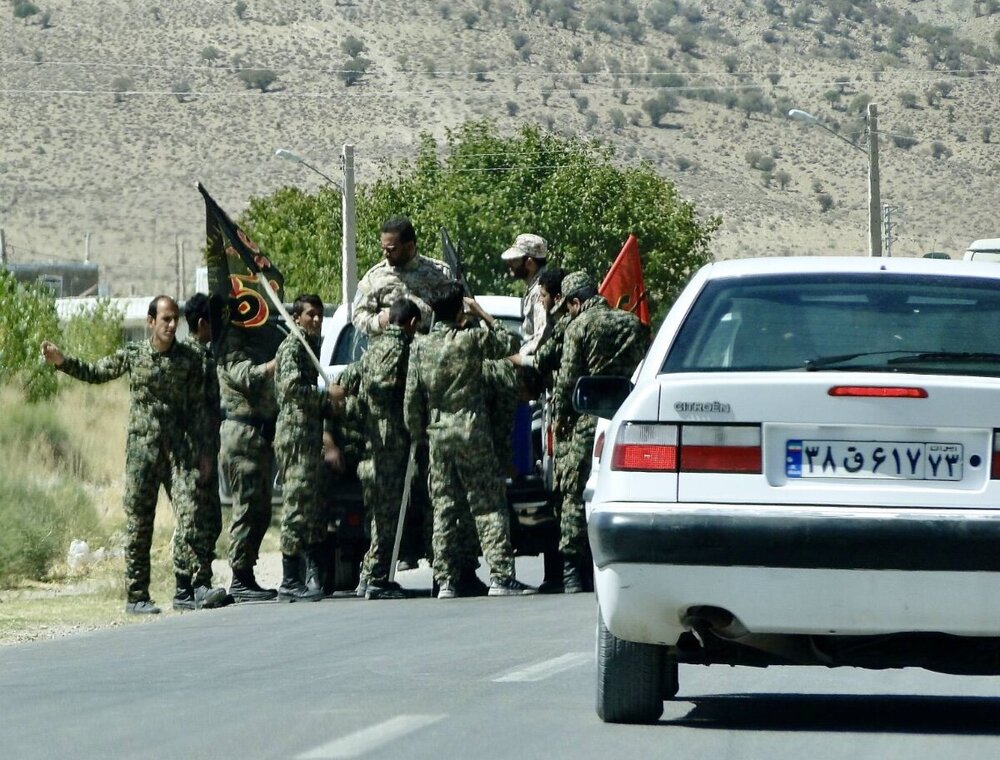
-
Israel And The Palestinians: A Nightmare In Desperate Search Of A Solution
PeterRS replied to PeterRS's topic in The Beer Bar
I'm sorry - and with all respect for all your many valuable contributions to this Board - that is a complete cop out. To state unequivocally on the one hand "no autocratic regime has more to lose than Iran if it miscalculates the consequence of future actions" and on the other give not one clue as to what these consequences might be suggests the original statement is probably incorrect. Had it been made about quite a number of other countries inthe world, I would absolutely have agreed with you. About Iran, sorry I can not.